years
years


What Is Air Pollution Index?
When we look outside and see a hazy sky, reduced visibility or smoke in the air, it is easy to recognise that air quality has changed. But how do we know how polluted the air actually is?
This is where the Air Pollutant Index, or API comes in.
What Is the Air Pollutant Index?
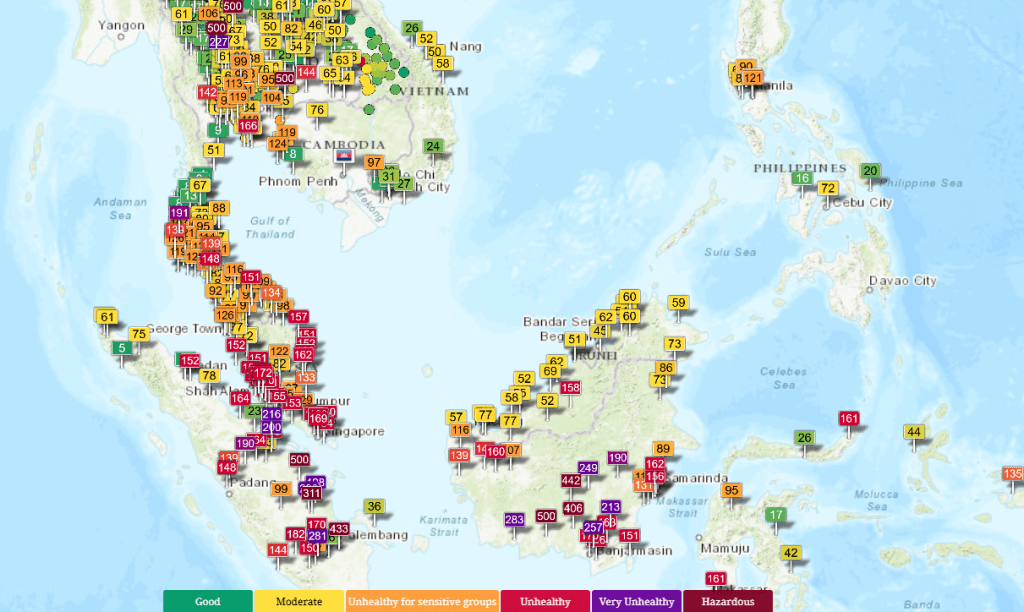
Source: World Air Quality Index Project. (n.d.). Air Pollution in Malaysia (https://aqicn.org/map/malaysia/)
The Air Pollutant Index, is an indicator of the level of air pollution in a particular area at a given time.
Think of it as a simplified way of answering a basic question:
“How clean or polluted is the air around us?”
Rather than looking at several pollutant measurements separately, the Air Pollution Index converts them into index values that are easier to understand.
In Malaysia, the API scale is broadly divided into different air quality categories, ranging from Good to Hazardous. As the reading increases, the level of air pollution and potential health concern also increases.
Importantly, the API is not a measurement of just one pollutant. It takes several pollutants into account.
How Is the Air Pollution Index Measured?
Air quality monitoring stations measure concentrations of specific pollutants in the ambient air. Under Malaysia’s current API calculation framework, these include:
- PM₁₀ – particulate matter with a diameter of 10 micrometres or smaller
- PM₂.₅ – fine particulate matter with a diameter of 2.5 micrometres or smaller
- Carbon monoxide (CO)
- Ozone (O₃)
These pollutants are not all measured over exactly the same period. Different averaging periods are used because different pollutants have different exposure characteristics. For example, PM₁₀ and PM₂.₅ use a 24-hour averaging period, while ozone can use 1-hour and 8-hour measurements, and carbon monoxide uses an 8-hour averaging period.
The process can be simplified into three steps:
1. Measure the pollutants
Monitoring stations measure the concentration of individual pollutants in the surrounding air.
2. Convert the measurements into sub-index values
Each pollutant concentration is processed using a specific calculation to produce a sub-index. This converts different pollutant measurements into a common index scale.
3. Identify the highest sub-index
The highest relevant sub-index becomes the API reading for that period.
This is an important point.
The API does not simply average all pollutants together.
Instead, the pollutant producing the highest sub-index effectively determines the API reading. The responsible pollutant can then be identified to provide more information about the air quality condition.
For example, during haze conditions, particulate matter can often be the dominant pollutant and therefore have the greatest influence on the API reading.
Also Read: Why Do I Need a Pre-Filter?
Why Does the Air Pollution Index Matter?
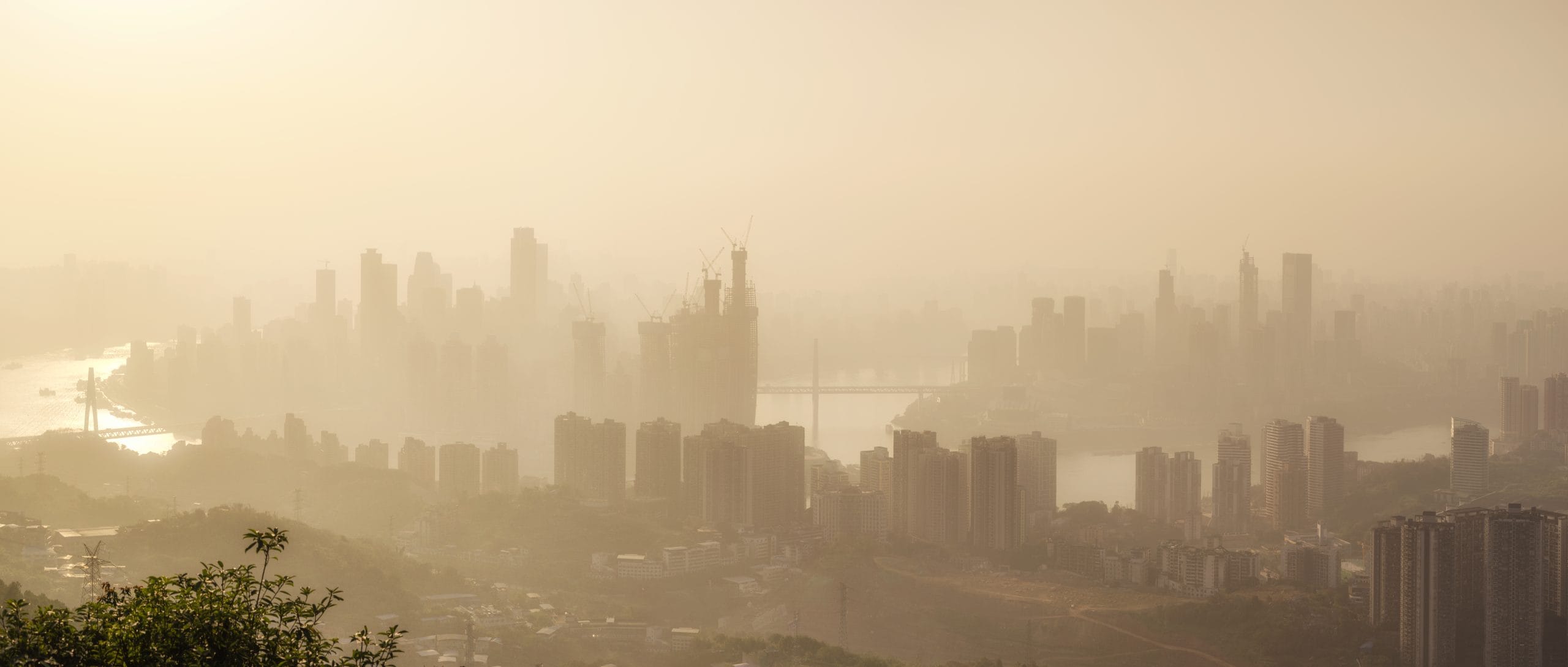
The Air Pollution Index matters because air pollution is not always visible.
We may notice haze because the sky looks different, but many air pollutants cannot be seen with the naked eye.
Fine particles such as PM₂.₅ are small enough to remain suspended in the air and can be difficult to detect simply by looking around us. Other gaseous pollutants, such as nitrogen dioxide, sulphur dioxide and carbon monoxide, are also not necessarily visible.
The API therefore gives the public a practical reference for understanding changing air quality conditions.
It can help people make everyday decisions such as whether to:
- Spend less time outdoors
- Reduce strenuous outdoor activities
- Take additional precautions when air quality deteriorates
- Pay closer attention to official air quality updates
- Consider how outdoor air may affect indoor environments
For businesses and industrial facilities, the API can also serve as an early indicator of changing outdoor air conditions.
When outdoor air quality deteriorates, facilities that bring outdoor air into their buildings may need to pay closer attention to their ventilation and filtration systems.
Related: Simple Ways to Maintain Good IAQ During Family Gatherings
From an Air Pollution Index Reading to Better Air Quality Decisions

The next time you see an API reading, think beyond the number.
Ask yourself:
What is driving the reading?
What pollutants are present?
How might outdoor conditions affect the people and environment inside a building?
Is the existing ventilation and filtration system appropriate for those conditions?
The API gives us a valuable starting point by translating complex air quality measurements into information that is easier to understand and act upon.
But clean air management goes one step further.
Understanding the pollutants, their sources, the environment and the required level of protection is what allows the right air quality strategy to be developed.
Because whether the goal is protecting people, processes or equipment, knowing what is in the air is the first step towards managing it.
Next Read: Common Sources of Particulate Matter During a Family Gathering